The challenge: Modernizing a 20-year-old platform
When I joined Quickbase in March 2020, the company had built a successful low-code app development platform over two decades, despite paying limited attention to user experience or visual design. By the time I joined, users and prospective customers were consistently describing Quickbase as "clunky" and dated. The company had started building a proper design practice, but the team was fighting for recognition in a deeply engineering-led organization where design was often viewed as something that "just slowed things down."
In 2022, I was promoted from Senior Interaction Designer to Product Design Manager and took on leadership of half the design team—four designers split between visual and interaction design roles. The stakes were high: Quickbase needed to attract new customers with modern expectations while avoiding alienating longtime users who were running their businesses on the existing platform.
Leading through adversity: Taking the helm
The tech industry's financial challenges in 2024 and 2025 resulted in two rounds of layoffs at Quickbase. Through the restructuring in 2025, I assumed responsibility for the entire product design team—now six people, including myself. What could have been simply a survival moment became an opportunity to fundamentally reshape how the entire design organization operated.
Restructuring for impact
Even when I was only managing half of the design team, I collaborated with the team's senior leadership to make changes I knew would prove transformative. I recognized that the division between visual and interaction designers created inefficiencies and limited each designer's impact. I systematically trained my portion of the team to work as full-stack product designers, and eventually role distinctions were eliminated entirely across the entire design team. I also established a one-to-one collaboration model where each designer partnered directly with a product manager to jointly lead major projects. These structural changes built trust, streamlined communication, and gave designers a seat at the table from day one.
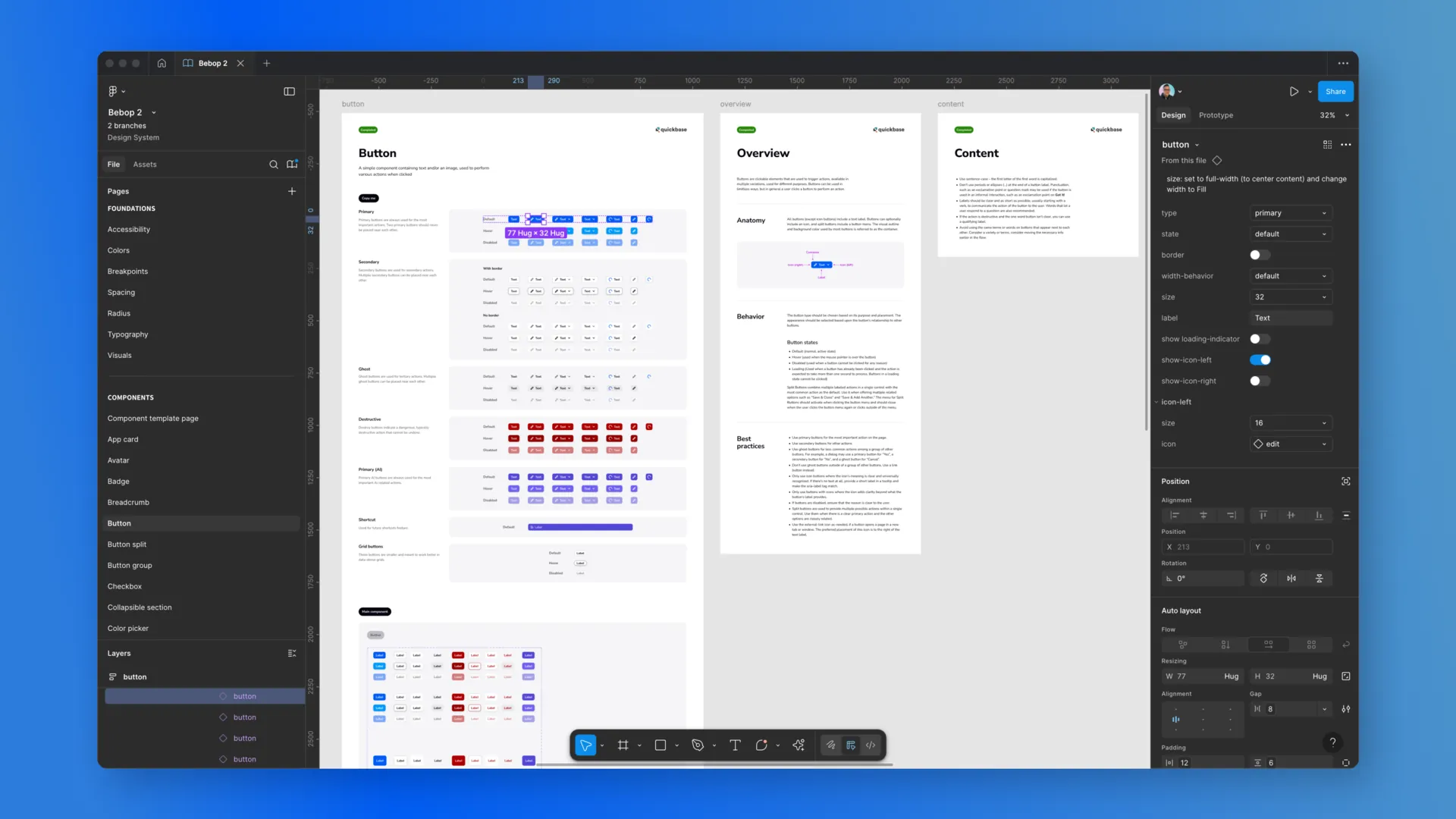
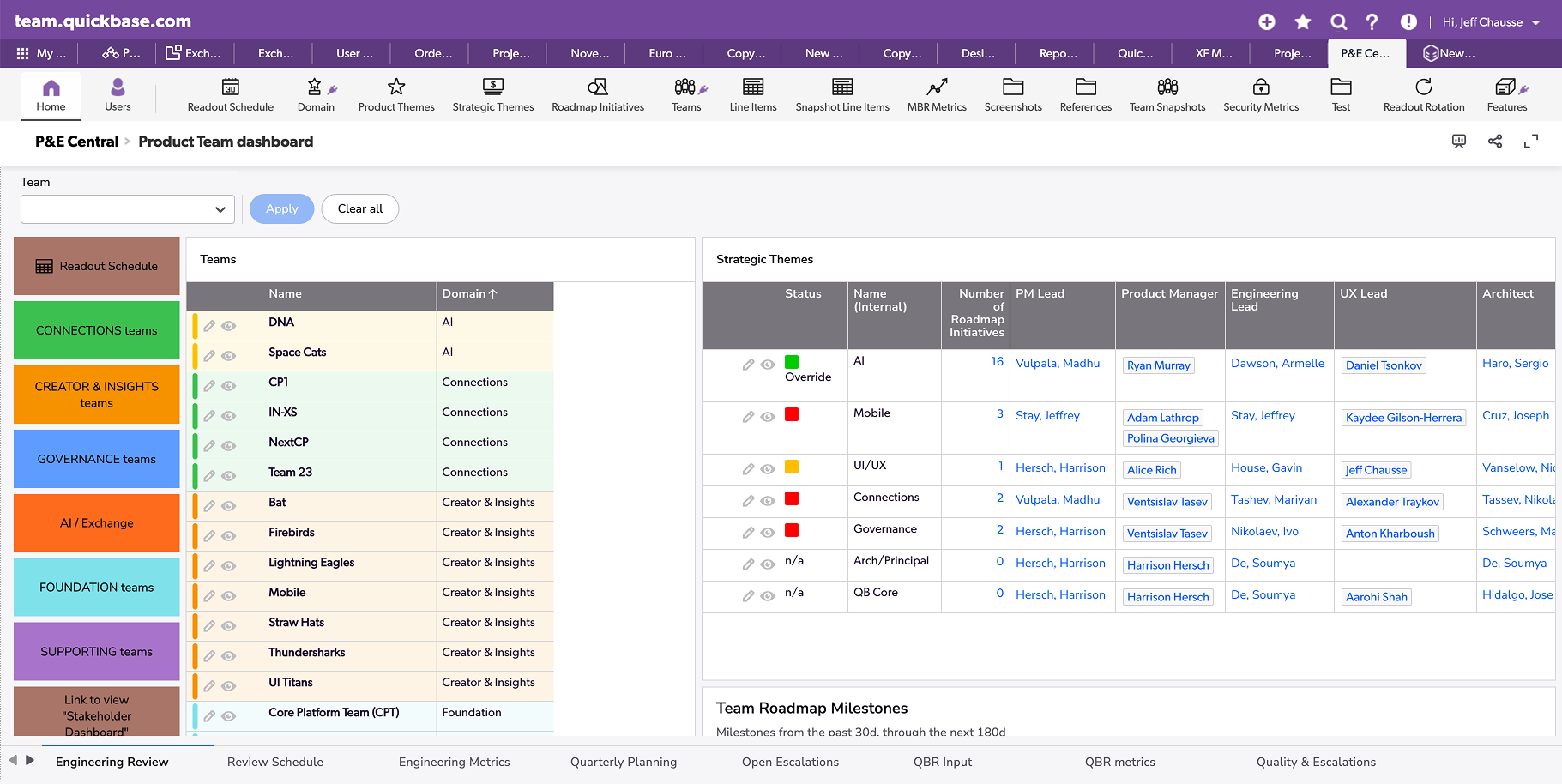
When I took over the entire design team in 2025, I was able to scale these practices across the organization and further streamline our operations. I restructured our regular team meetings for efficiency, established specific weekly collaboration rhythms between designers, PMs, and development teams, and standardized the way we used tools like Figma and Dovetail. Recently, I've been pushing the team to aggressively embrace AI-assisted design tools like Figma Make. With Make, we are already able to create fully functional prototypes in a single day, where we would previously have spent weeks just to create static mockups.
The flagship project: New navigation
The most dramatic demonstration of the design team's value came through a project dubbed "New Nav"—a complete overhaul of Quickbase's navigation and visual design system that I advocated for and led, first as an IC and then in an advisory role when I became team manager, working with one of my reports who took over day-to-day design execution.
The existing platform navigation was fundamentally inefficient: navigation elements consumed excessive screen real estate, keyboard navigation was awkward or absent, and the interface handled different screen sizes poorly. Customers and prospects alike described the legacy UI as "dated" and "clunky," and confusing task flows were a persistent source of frustration. We saw an opportunity to do more than just refresh the interface: we used New Nav as the starting point for building out an updated, comprehensive design system intended to modernize the entire platform. Drawing on extensive UX research and customer feedback, we anchored the redesign in familiar interaction patterns, streamlined access to key functionality, and robust accessibility accommodations—ensuring the platform was both approachable for new users and efficient for experienced ones. Recognizing the complexity and importance of the project, the company's senior leadership gave us the latitude to launch only when we felt we were truly ready, which took approximately two years of research, design, and development.
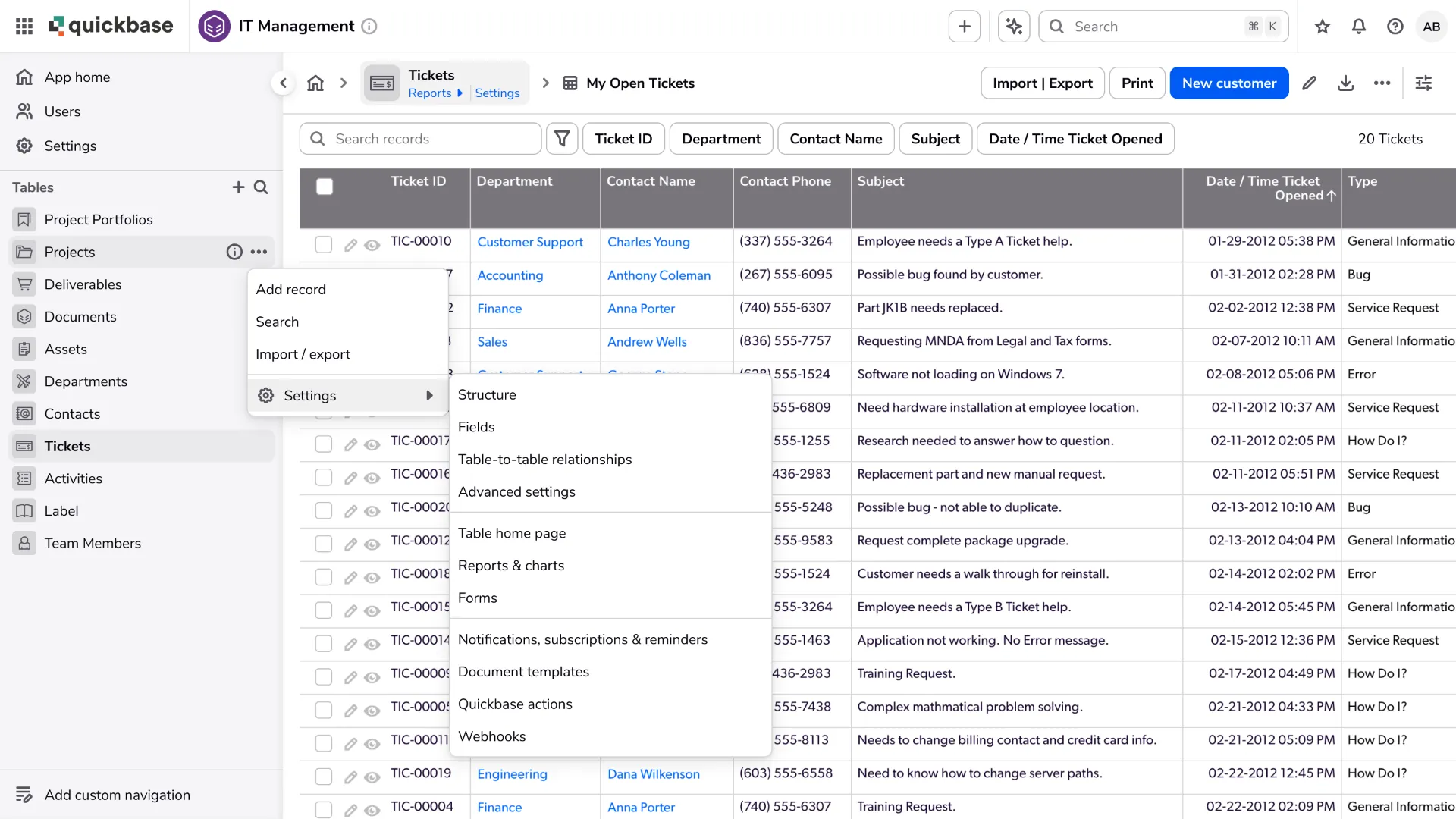
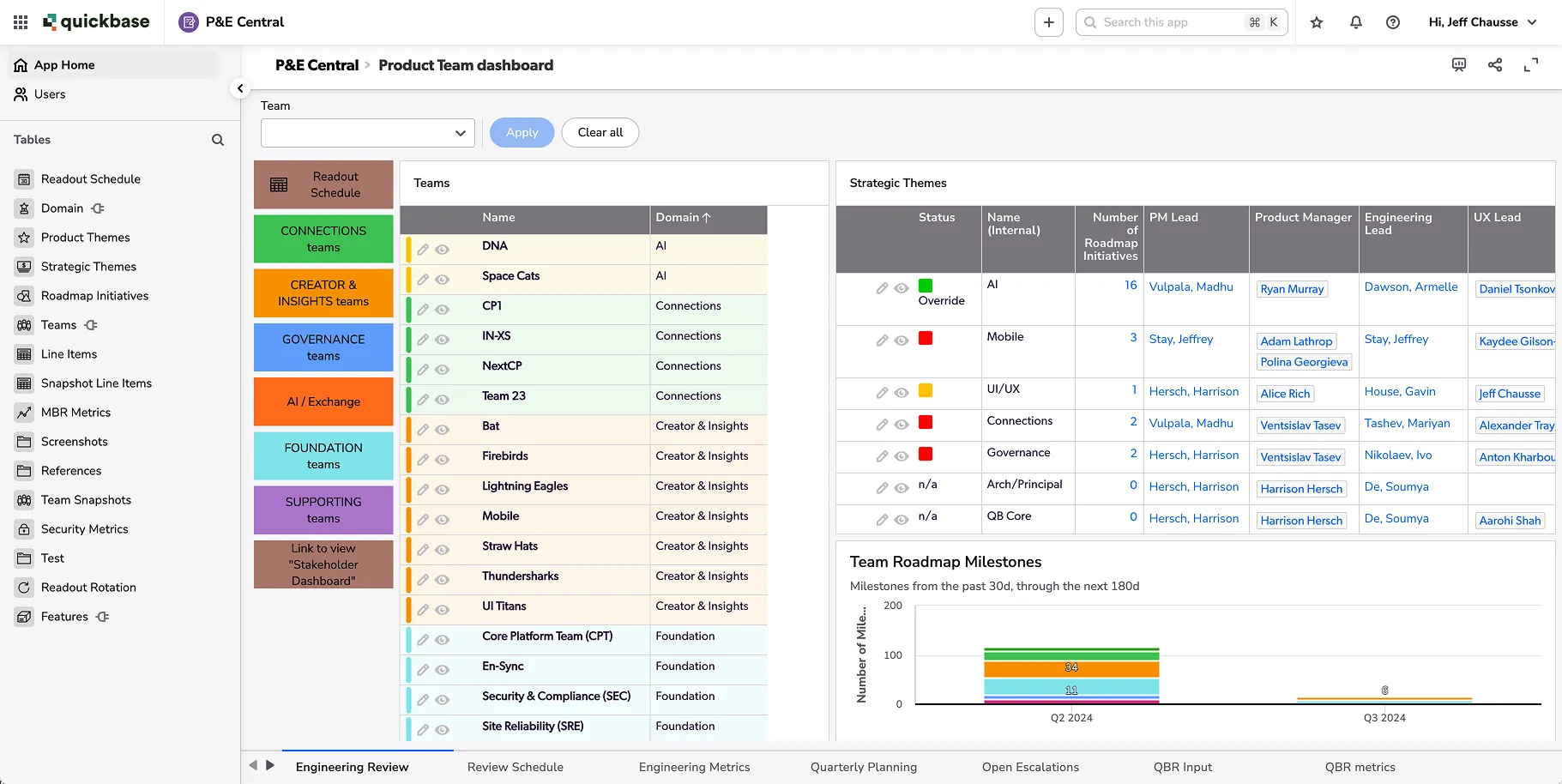
We faced two major challenges. First, Quickbase's dated codebase made applying a modern interface across all areas genuinely difficult. I led collaborative discussions with engineering to find a way to ensure a consistent experience across the platform. We also made a pivotal project management decision to focus almost entirely on making existing tasks easier rather than adding new functionality. This would ease the transition process for customers who were nervous about how these changes would affect their end users.
Second, longtime customers had become deeply attached to the old way of doing things, while we increasingly needed to attract new customers. Our approach to this challenge was to obsessively focus on making the new interface objectively more effective—cataloging every task and counting clicks to ensure we maintained or reduced steps for each action. We also met with customers constantly, iterating many times to get the experience just right.
When New Nav launched, the project was overwhelmingly successful. More importantly, it fundamentally changed how the company viewed design. The project proved that when design was given adequate time for upfront research and iterative refinement, the results justified the investment. The next major redesign initiative—an overhaul of Quickbase's table reports—was also given wide leeway to launch when ready, and its launch in late 2025 repeated New Nav's successful rollout and reception.
Modernizing forms: The next foundational redesign
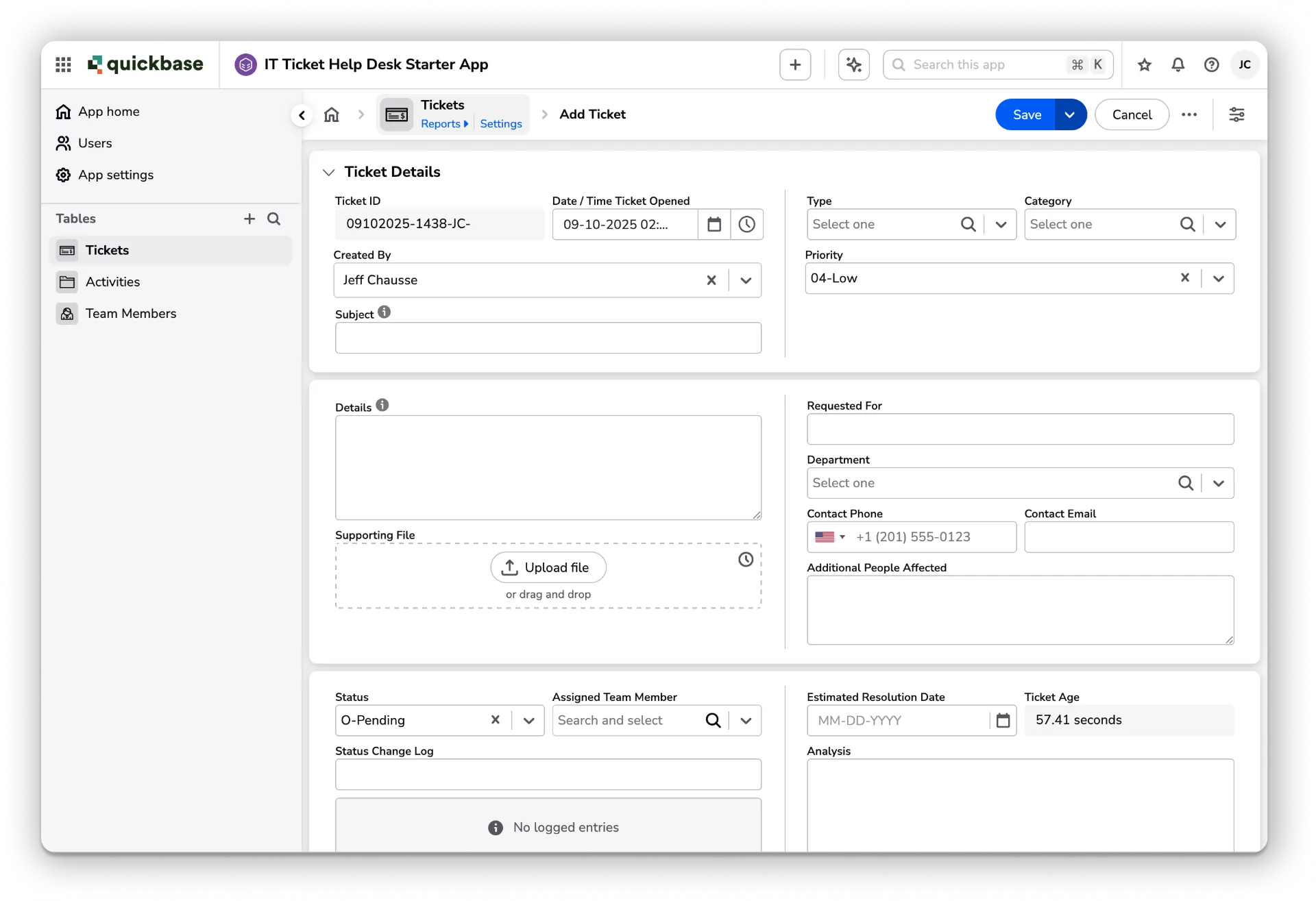
With New Nav setting the template for how ambitious design work could succeed at Quickbase, I turned the team's attention to another foundational piece of the platform: forms. Forms are how Quickbase customers collect, visualize, and manage data, and the existing experience hadn't kept up with modern expectations around responsiveness, accessibility, or visual polish. As lead designer on the New Forms project, I drove the creation of a modern, WYSIWYG form builder and end-user experience—intuitive drag-and-drop construction, accessible defaults like top-aligned labels, and flexible layouts that supported responsive, multi-step forms with advanced logic and embedded reports.
The redesign modernized both the visual language and the technical foundation of forms while staying anchored in user feedback and accessibility best practices. The result was a transformative upgrade that improved form usability, accelerated app building, and cut form creation time by roughly 35%—positioning Quickbase to better serve both new and existing customers with scalable, future-ready workflows.
My management philosophy
My management style is based on how I've always wanted to be managed myself. Give me interesting work, provide the tools I need, and trust that I'll get the job done. I think of a manager's job as removing obstacles that prevent their team from using their skills to help the company achieve its goals. When skills and motivation are aligned with company goals, a team functions at its best. I'm constantly working to achieve and maintain that alignment with my team.
While I love being a manager, I still greatly enjoy hands-on design and will never stop caring about small details. I'm very active in defining and structuring my team's responsibilities at a high level, and I love collaborating with them on the small details of their work. But for everything in between—the day-to-day management of how their time is spent and how they communicate with stakeholders—I trust them to work wisely and productively. And by empowering my team with that level of trust, I find they rarely let me down.
Looking forward
My work at Quickbase has reinforced that the most valuable design leaders operate across multiple altitudes—from organizational strategy down to pixel-level craft. As AI tools become more sophisticated, I'm increasingly focused on how they can amplify designer productivity without diminishing the critical thinking that makes design valuable. The ability to prototype with "vibe coding" tools rapidly changes how we explore ideas, but it raises important questions about where human designers should focus their energy.
The challenge I'm most excited about is helping designers develop the strategic and communication skills that allow them to operate as true partners to product and engineering. Technical craft will always matter, but the designers who will thrive are those who can articulate the "why" behind their work and build relationships that turn good ideas into successful products. That's where I want to continue investing my energy—creating environments where designers can do their best work and grow into leaders themselves.