
The opportunity that changed everything
In April 2008, I walked into Harmonix Music Systems as their new Web Director – my first management role. I had no direct reports in my previous positions, no formal leadership training, and I was about to oversee the web presence for one of the hottest gaming franchises in the world. Rock Band 2 was in development, the company had just been acquired by MTV, and the cash was flowing. But there was a catch: the company's Creative Director, Josh Randall, could no longer oversee the web team part-time because he was consumed by a secret project codenamed "Project 9."
Only after I started did I learn what Project 9 really was: The Beatles: Rock Band – the first video game ever to feature officially licensed music and imagery of The Beatles. Perhaps it was Josh's desperation to free up time to meet with Paul and Ringo that led him to hire someone with a diverse skillset – but no formal management experience – straight into a director role.
Sir Richard Branson famously said, "If somebody offers you an amazing opportunity but you are not sure you can do it, say yes – then learn how to do it later!" That became my mantra for the next three years.
Building a team to do the impossible
I inherited a scrappy team of seven: three developers, a producer, an associate producer, a legitimate rock journalist, and a Flash developer with visual design chops. The team had talent, but we had ambitious plans for the Rock Band 2 website already in progress, and I needed to scale quickly.
I was given complete control over how to build the team, and I moved fast. My first two hires were designers I'd worked with before – a pure UX designer who had inspired my own transition from engineering to design, and a talented graphic designer with UX capabilities. I brought on two QA engineers, a content manager, and several more designers and developers. Within months, I was managing a cross-functional team of 12 people.
Going from zero direct reports to twelve was a baptism by fire. Most of the team worked on RockBand.com under a full-time producer, supporting both Rock Band 2 and eventually Rock Band 3. Smaller teams tackled side projects – most notably the Beatles website.
The mistakes every first-time manager makes
My biggest missteps had everything to do with communication. I had no idea how differently people interpreted information coming from a manager versus a peer. I was simultaneously trying to be everyone's friend while also feeling like I had a lot to prove. Frankly, I was sometimes kind of a jerk when trying to push the team to keep up with the crazy pace of a AAA game studio.
One of the most valuable pieces of advice I received came from an experienced mentor: never try to address tricky personnel problems via email. Sensitive issues require face-to-face conversation. It's easy to write a long email thinking you've addressed a problem when you've actually achieved nothing except creating resentment from team members who felt they were on the receiving end of a one-sided attack.
I learned that respect as a leader isn't something that comes with a title – it's something you earn.
Creating under pressure
Crunch time was very real at Harmonix. Working until 8 PM or beyond was common. But there was incredible camaraderie. The whole company was passionate about the creative and technical brilliance they were bringing into the world.
I kept morale up by giving my team control over what they created and how they created it, matching work to individual passions whenever possible. One Flash developer wanted to push himself into full-stack design work. I let him take on the end-to-end design of a microsite for Rock Band: Green Day. He loved the band and the challenge. The result was a beautiful site that truly captured the spirit of both the game and the band.
The
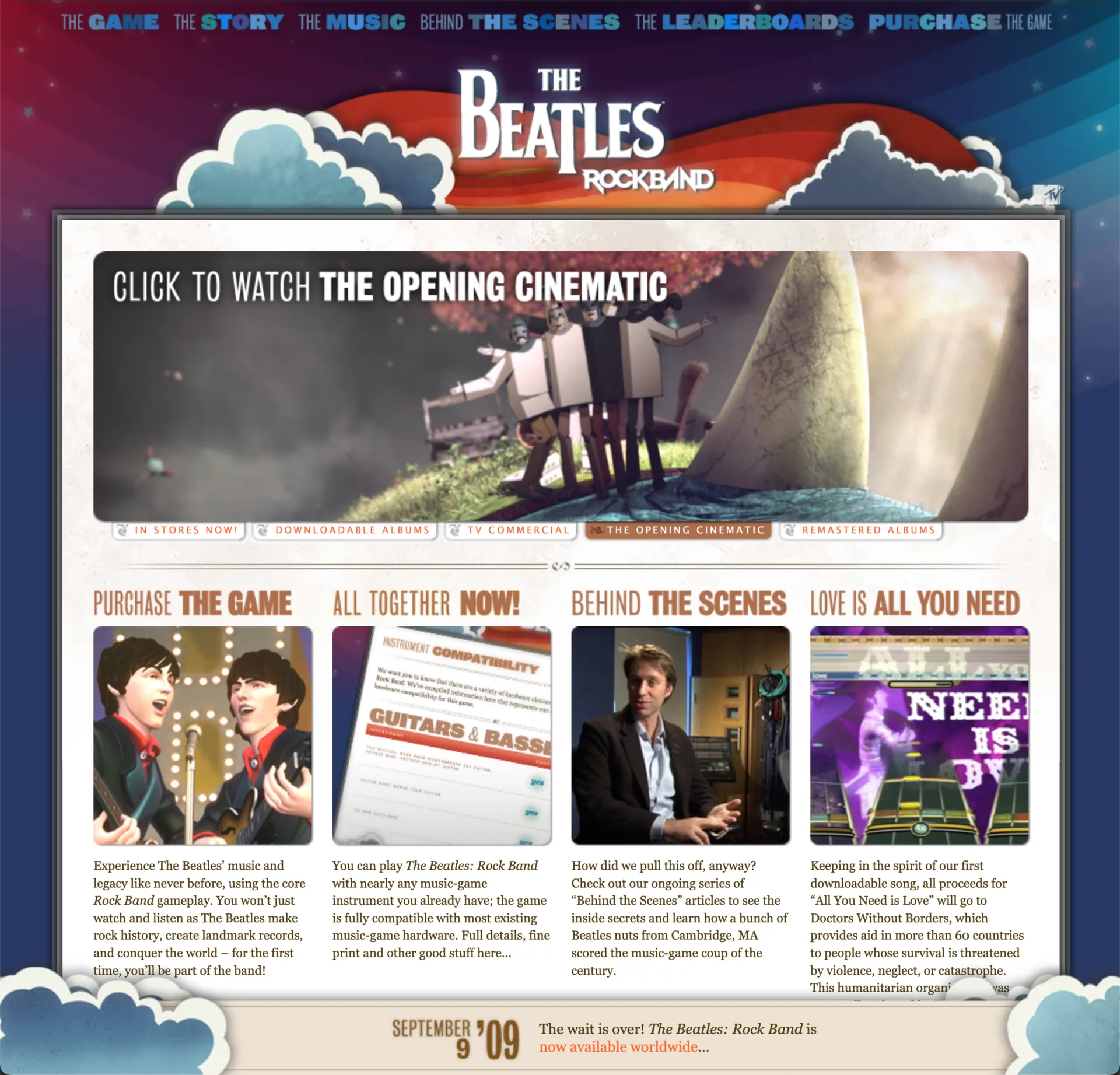
Overseeing the creation of the website for The Beatles: Rock Band was one of the most memorable projects of my life. While I never met a Beatle in person, unlike some of my peers, I was regularly on phone meetings with the creative team at Apple Records, including Giles Martin, son of legendary Beatles producer George Martin.
The quality bar for any project with The Beatles is extraordinarily high. There were strict rules about how the band was to be presented, including a specific order in which band members were always to be presented, and every detail had to be approved by the team at Apple. I understood the unique significance of this project and set an overarching goal: create a website that truly felt like a timeless artifact that could stay online forever and present the magic of The Beatles to generations to come.
The project would have been impossible without designer Rumsey Taylor, who absolutely nailed it with his impeccable visual taste and extreme attention to detail. One of my favorite elements of the site was the 404 page featuring a sunken Yellow Submarine – something the team snuck in without my awareness (and thus without Apple Records' awareness, who probably would have rejected it). In hindsight, it was absolute genius. That kind of creative risk-taking told me I was building the right culture.
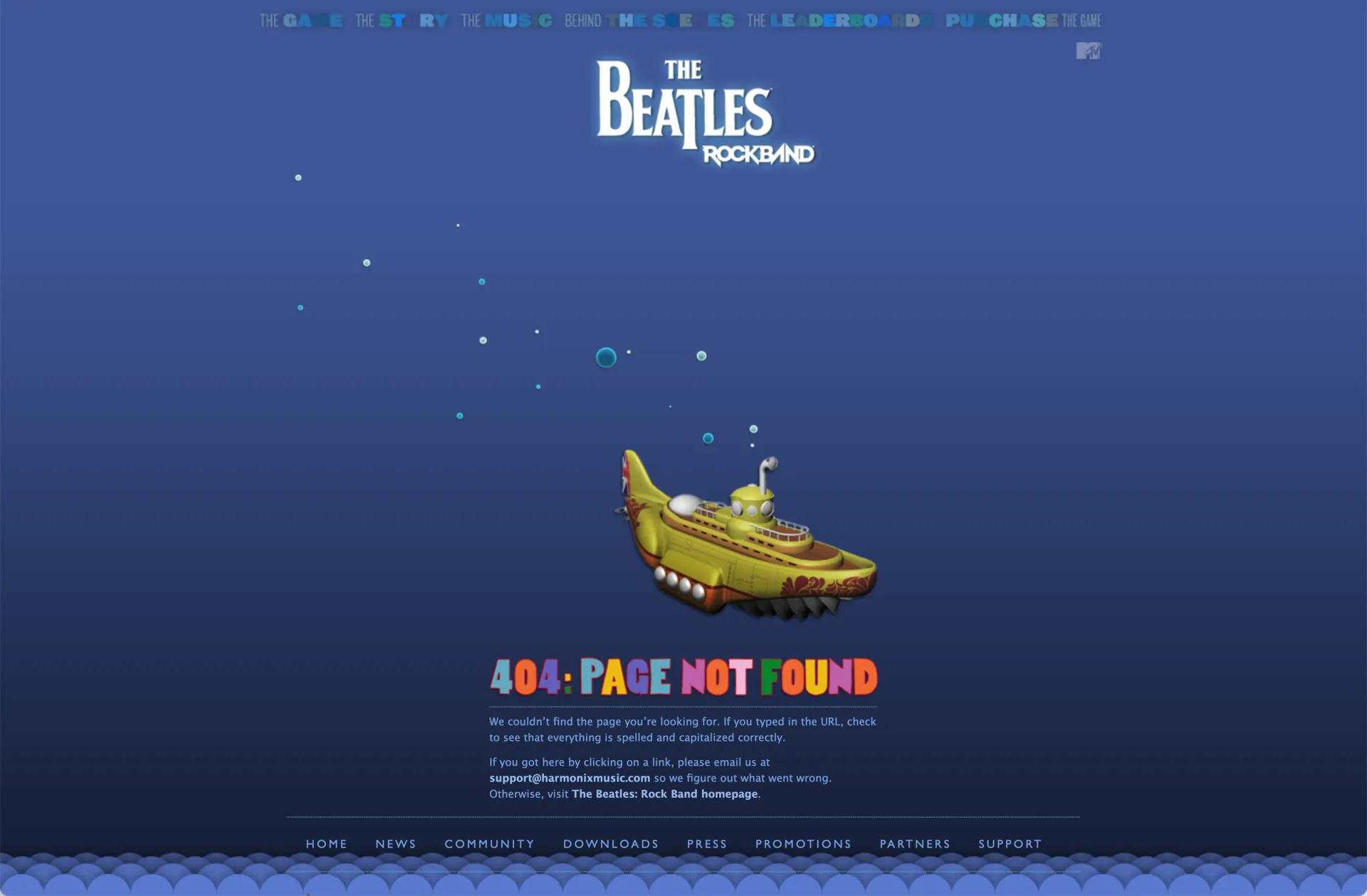
TheBeatlesRockBand.com won a Webby Award in 2010 for Best Game-Related Website. It broke my heart when the company eventually took the site offline.
Beyond marketing: Building a platform
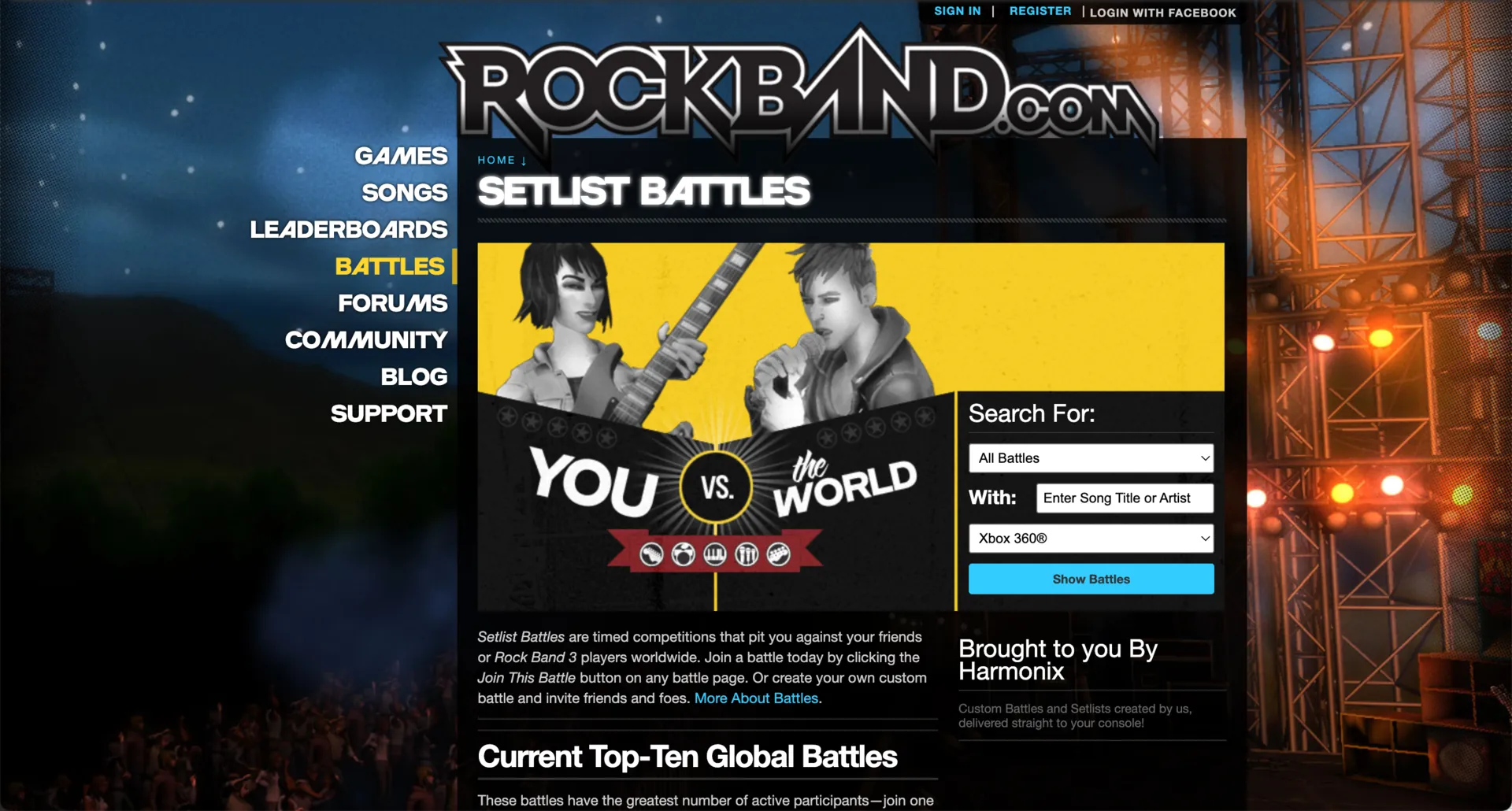
RockBand.com wasn't just a marketing site – it was a platform. Over a four year span, my team led two major redesigns of the site as the franchise evolved through Rock Band 2, Rock Band 3, and a string of spinoff titles. We had a full-time rock journalist on staff providing background on DLC tracks and interviewing bands. We also built integrations between a website and console games that had never been attempted before, especially with Rock Band 3, which allowed players to create playlists, challenge each other in customized competitions online, load them into the game, and then upload scores back to worldwide leaderboards. Major accomplishments could even be automatically exported to Facebook – cutting-edge social integration for its time.
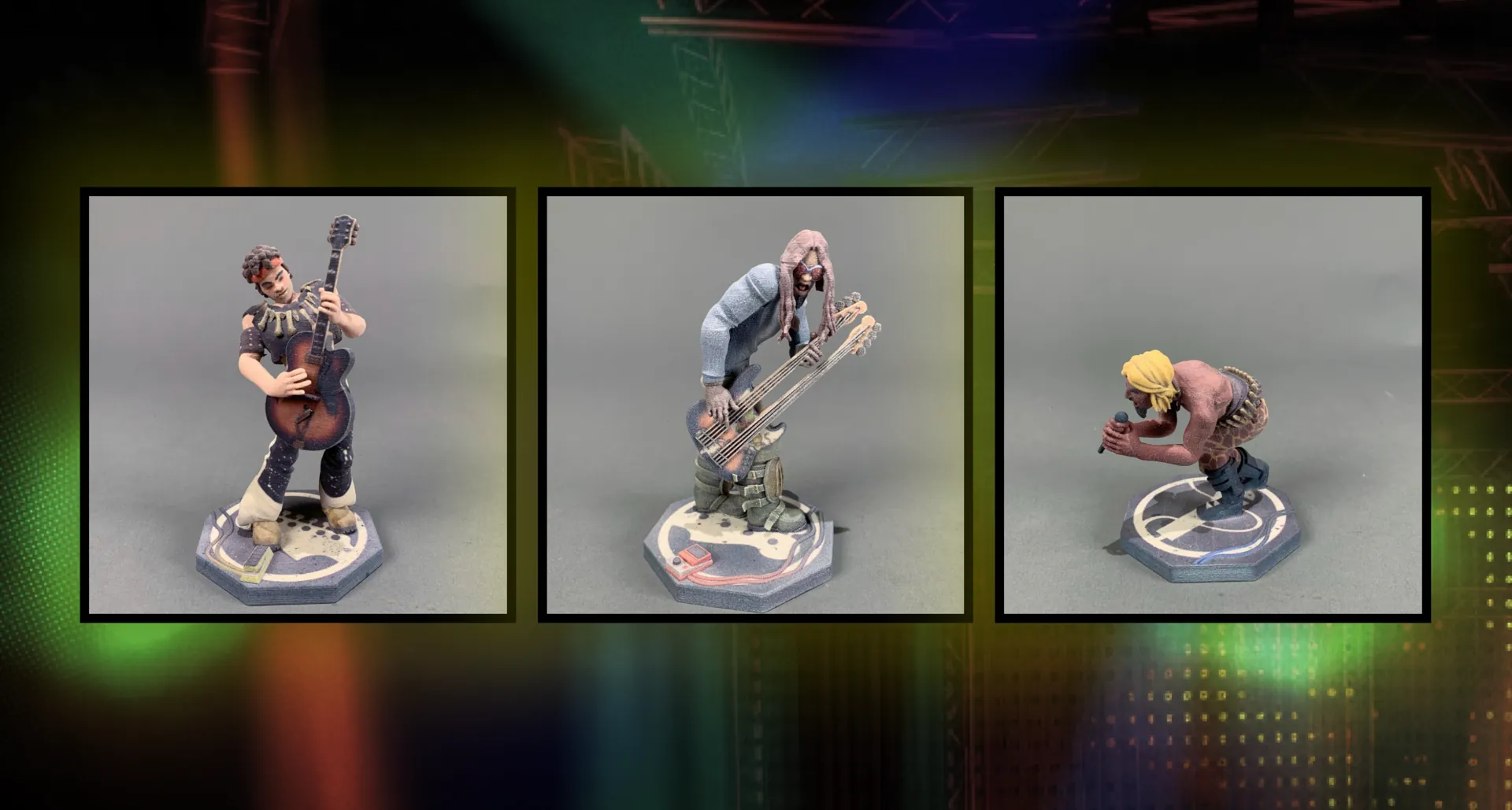
One of the most unique challenges was a project I inherited where users could render photos and purchase physical 3D-printed statues of their in-game characters (called "Bandmates"). This required deep integration between game and website to transfer 3D data and preview a statue that cost about $100 to own.
Between 2009 and 2011, we doubled registered site users from 210,000+ to 470,000+ – driven by weekly DLC releases, community features, and giving people more reasons to visit beyond the site's discussion forums.
Leading through crisis
By 2011, everything was changing. The rivalry between Activision and Harmonix had oversaturated the rhythm game market, and the genre collapsed under its own weight. Activision shut down Guitar Hero. Harmonix laid off staff.
I had to manage through two rounds of layoffs. Unlike at other companies where I've worked, I had to handle all layoff conversations with my reports personally. One long-time employee stormed out mid-conversation and had to be physically tracked down by coworkers just to receive his severance benefits.
I kept the remaining team motivated after the first layoff by giving them even more autonomy and roles that challenged them. When the second layoff happened, the team was reduced to such a small size that I volunteered myself to be part of it. The team no longer needed a director – they needed all hands on deck actually building things. I handed the reins to the team's producer, who had originally been hired as a content manager and worked her way up to being a true leader. Helping her grow in her career remains one of my proudest managerial accomplishments.
Leading through crisis forced me to acknowledge that business forces are real, and sometimes as a manager you have no choice but to look at things in terms of numbers. But that doesn't mean you're off the hook for treating people with empathy and respect.
What I carried forward
Those three years at Harmonix taught me that I was capable of pretty much anything I set my mind to. Managing a team, growing a team, working in a new industry, presenting to the president of MTV, collaborating with living legends – all of it was new to me, and I learned to believe in myself.
I approach management today by building trust with my team: trust that I know something about what I'm asking them to do, that I will jump into a project headfirst when they truly need my help, and that I genuinely care about their well-being and goals.
After leaving Harmonix, I transitioned to Koko FitClub, where I combined product management with hands-on UX design for an innovative fitness company whose approach to working out felt very similar to a video game. A couple years later, I returned to management at Forrester, where I led a team of graphic designers while continuing hands-on design work – a balance I've maintained ever since.
Saying yes to an incredible and totally unexpected opportunity taught me how to learn to lead by doing it – and that origin story still shapes every team I build today.